Start with a reference, not a promise
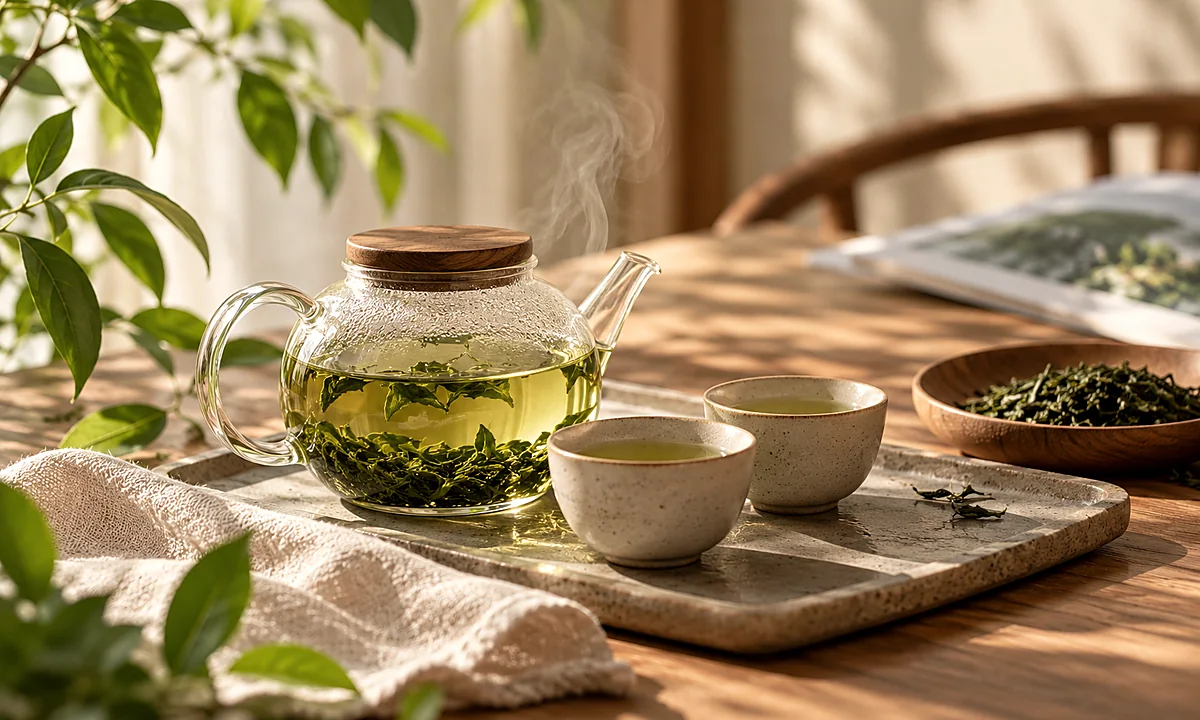
Caffeine is naturally present in true tea made from Camellia sinensis. Its amount is often discussed as if every green tea or every black tea had a fixed number, but beverage measurements vary. The FDA’s consumer guidance gives 37 mg for 12 fluid ounces of green tea and 71 mg for 12 fluid ounces of black tea as typical category examples. Its reference range for a 12-ounce brewed coffee is much wider: 113–247 mg.
These values help you compare beverage categories. They do not describe every supermarket bottle, restaurant order or carefully prepared loose-leaf brew. If a packaged product gives a measured caffeine amount, that label is likely to be more useful for that specific item than a category average.
Three reasons your mug can differ
First, size. A standard-looking teacup and a travel mug may contain very different volumes. Second, leaf amount and composition. A scoop of one tea is not necessarily chemically equivalent to a tea bag from another brand. Third, preparation. Water temperature, steeping time and whether you re-steep the leaves can change what ends up in your cup.
Because these factors interact, it is not possible to look at the color of a drink and know its exact caffeine content. A pale tea could still contain caffeine, while a dark herbal infusion made without tea leaves might naturally contain none.
How much is too much?
For most adults, the FDA cites 400 mg per day as an amount not generally associated with negative effects. That does not mean everyone should drink that much. Pregnancy, certain medications, health conditions and personal sensitivity can change the appropriate amount. Children and teenagers have different considerations and should not use adult reference figures as targets.
Possible signs of consuming too much caffeine include jitteriness, sleep problems, anxiety, palpitations and digestive upset. If caffeine makes you feel unwell, an “average safe amount” on a website should not override how you feel or advice from your clinician.
Make the numbers useful
Write down the caffeinated drinks you actually consume for one typical day, including coffee, tea, soda and energy drinks. Use product labels where available. For tea without declared data, a reference estimate can show the approximate scale of your intake. Try the Tea Caffeine Estimator to compare a few 12-ounce servings using FDA figures; it deliberately describes the output as an estimate.
Remember: decaffeinated tea still can contain small amounts of caffeine. Herbal tea usually refers to a different plant product, but mixed blends may contain green or black tea. The ingredient list is your best first check.
Our articles explain research for general readers. They do not diagnose, treat or replace guidance from a qualified healthcare professional.
Sources & further reading
Institutional guidance and original research used to prepare this explainer. Following these links helps you check the evidence for yourself.