Two ways a tea-like drink can be lower in caffeine
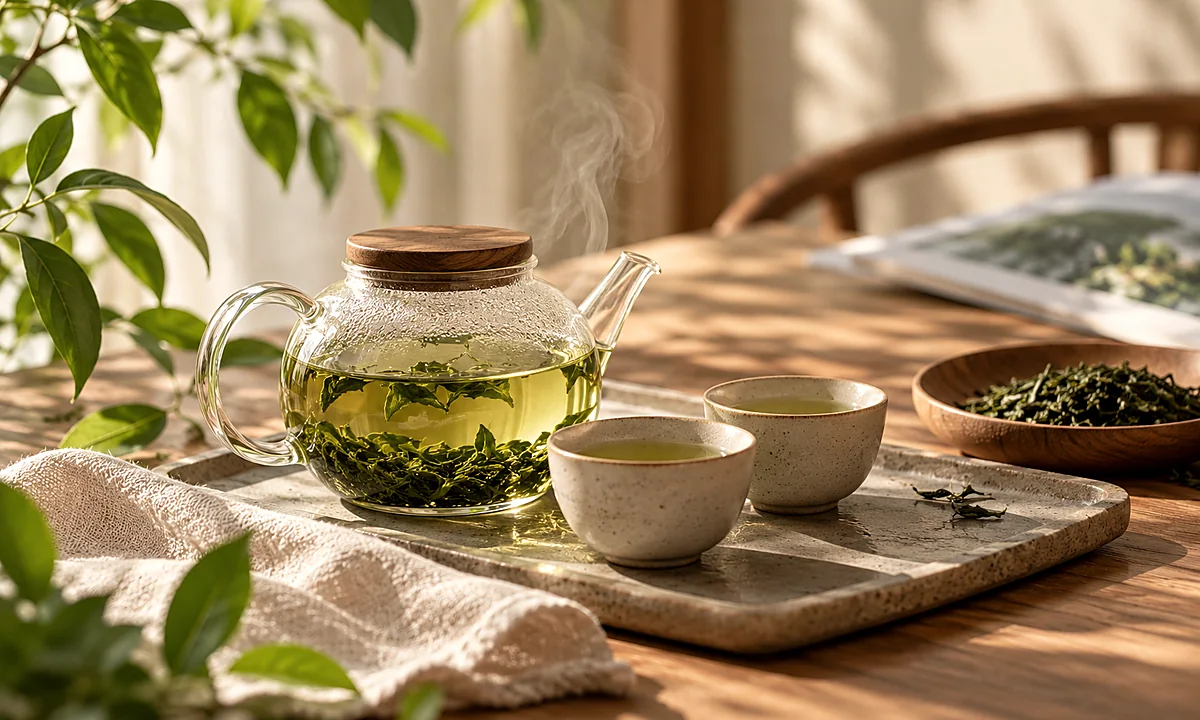
Decaffeinated tea usually begins with leaves of Camellia sinensis, the plant used for black, green and other true teas, and then undergoes processing to remove most of the caffeine. An herbal infusion starts with other botanicals—such as mint leaves, rooibos or certain flowers—instead of traditional tea leaves.
That distinction matters because decaffeinated tea may still contain some caffeine. The FDA is explicit that “decaffeinated” does not mean caffeine-free, and its published examples for decaffeinated coffee demonstrate the point. For a particular tea product, the package or manufacturer is the better source for a number than a generic claim.
Read the ingredient list, not just the name
A package labeled “sleepy tea” may contain a mixture of herbs, or it may mix herbs with green or black tea. A “chai” can refer to spiced black tea or a caffeine-free spice infusion, depending on the recipe. Rooibos is not made from Camellia sinensis, whereas jasmine green tea generally is.
Look for recognizable ingredients. If you see black tea, green tea, oolong, white tea, matcha or yerba mate, do not assume the blend is caffeine-free. If you are avoiding caffeine for a specific health reason, check the product with the manufacturer and your healthcare professional where appropriate.
Herbal does not automatically mean harmless
An herbal infusion can be delicious without needing a dramatic wellness claim. But botanical ingredients can still produce allergic reactions or interact with medications, and concentrated extracts differ from ordinary infusions. The NIH Office of Dietary Supplements advises that “natural” does not necessarily mean safe.
That is one reason our recipe pages focus on flavor and preparation rather than telling readers that a specific herb cures anxiety, insomnia or digestive disease.
A small shopping checklist
Decide whether you want the flavor of traditional tea with less caffeine or a completely different botanical infusion. Check the full ingredient list, look for caffeine information, and consider whether the product includes added sugar. Then choose the drink you actually enjoy—plain, iced or warm. A useful cup does not need to make a medical promise.
For ideas, try four simple evening infusions that emphasize taste rather than claims.
Our articles explain research for general readers. They do not diagnose, treat or replace guidance from a qualified healthcare professional.
Sources & further reading
Institutional guidance and original research used to prepare this explainer. Following these links helps you check the evidence for yourself.