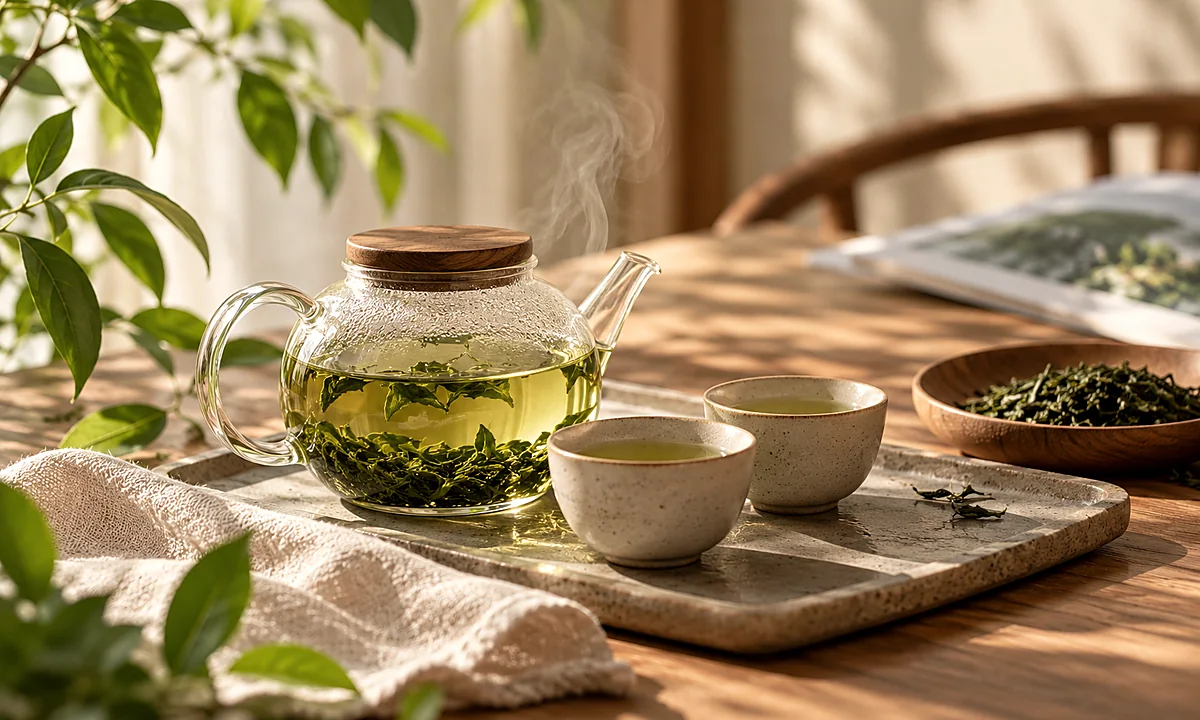
They begin with the same plant
When a package says green tea or black tea, it is describing how leaves from Camellia sinensis were processed, not two unrelated plants. Green, black, oolong and white teas all come from this species. Herbal infusions, such as peppermint, are made from other plants and belong to a different category.
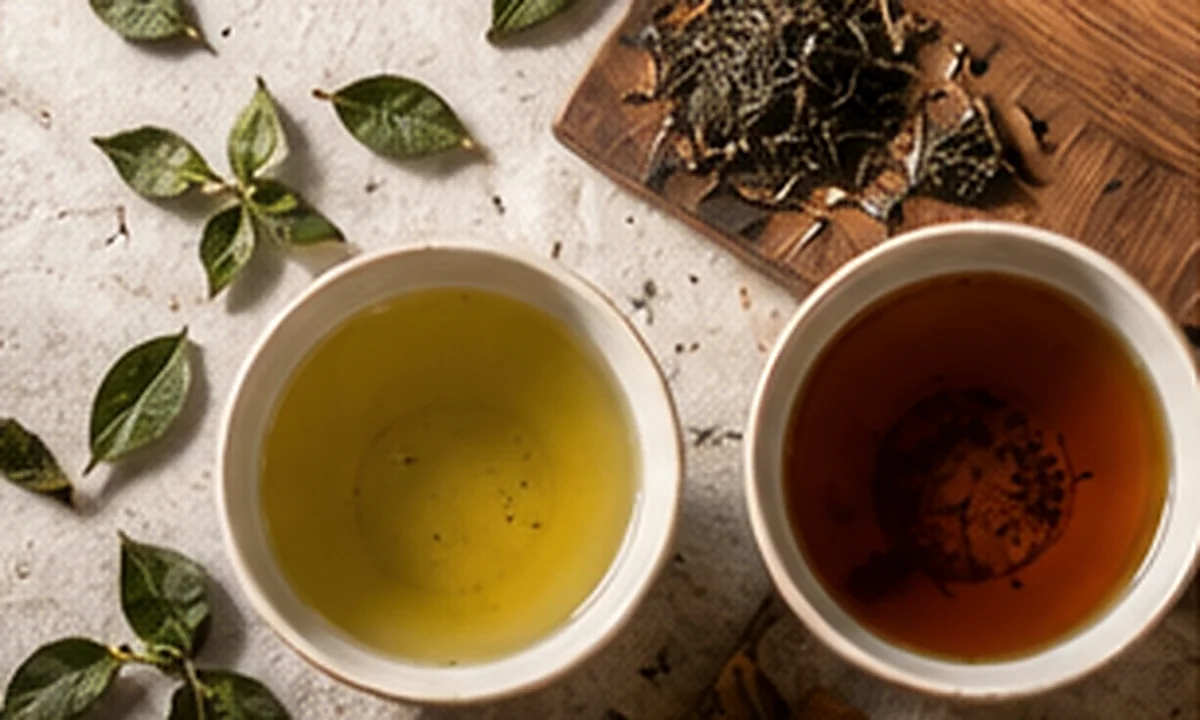
After harvesting, tea makers manage how much the leaf is bruised and exposed to oxygen before it is dried. Green tea is heated relatively early in processing to limit oxidation. Black tea undergoes more extensive oxidation, which changes the color and chemistry of the leaf as well as the flavor of the brew. Oolong tea sits on a broad spectrum in between.
What you may notice in the cup
Green tea can taste vegetal, grassy, sweet or marine-like, depending on the cultivar and production method. Black tea often develops malt, dried-fruit or brisk notes. These are descriptions of common flavor profiles, not rules: a delicate black tea may taste lighter than a strongly brewed green tea.
Brewing choices matter, too. The same leaves can produce a noticeably different result when you change water temperature, the amount of leaf or steeping time. If your tea tastes harsh, the first useful experiment is often to adjust the brew—not to decide that the entire tea type is wrong for you.
Does one have more caffeine?
Black tea usually contains more caffeine per typical serving than green tea in category-level estimates, but the overlap between individual products can be considerable. The FDA provides illustrative averages of 71 milligrams for 12 fluid ounces of black tea and 37 milligrams for 12 fluid ounces of green tea. Those figures are starting points, not laboratory readings for your mug. Leaf quantity, brewing time, brand and serving size can change the result.
If you want to keep track of what you drink, read a brand’s declared caffeine information when available and use our caffeine estimator as a rough comparison tool.
What about antioxidants?
Tea contains plant polyphenols. Different oxidation processes shift the mixture: green tea is associated with catechins, while black tea has products of oxidation including theaflavins. It is tempting to rank the teas by a single “antioxidant number,” but laboratory measurements do not translate neatly into a guaranteed human health outcome.
The U.S. National Center for Complementary and Integrative Health (NCCIH) says the evidence about tea and many long-term health outcomes remains limited or inconsistent. Its information also distinguishes brewed beverages from concentrated green tea extracts, which can have different safety considerations.
Which should you choose?
Choose green tea if you enjoy a lighter flavor or want a generally lower-caffeine category to explore. Choose black tea if you like a fuller, darker brew, especially with breakfast or iced. Neither is automatically the “healthiest” choice for every person, and neither substitutes for a balanced diet.
Try making both unsweetened at home, using the same cup size and writing down how each one tastes to you. A repeatable brewing routine is more useful than a universal ranking. If you are sensitive to caffeine or take medication that may interact with tea products, seek individual advice rather than relying on general comparisons.
Our articles explain research for general readers. They do not diagnose, treat or replace guidance from a qualified healthcare professional.
Sources & further reading
Institutional guidance and original research used to prepare this explainer. Following these links helps you check the evidence for yourself.